 Skip to content

When you’re first told you’ll need a stoma, there seems to be two standardised reactions.
1. Your life will never be the same again, this is the end. You’ll never wear normal clothes, you’ll be stuck at home, worried about leaks and smells and everything you enjoyed before surgery will somehow disappear alongside your colon.
2. Stoma surgery is the best thing that has ever happened to somebody, they’ve got their life back, everything is fabulous and apparently we’re all skipping into the sunset enthusiastically and pretending like we don’t have stomas.
Two years post op, I can tell you, I think the real world sits somewhere down the middle. I’m incredibly grateful for my stoma, and yet I wish I didn’t need it. Those two things coexist.
I didn’t have the luxury of preparing for stoma surgery
My ileostomy and mucus fistula were formed during emergency surgery in March 2024 after I developed a perforated bowel and sepsis following an incredibly difficult period of time admitted in hospital with ulcerative colitis. Before surgery, my life had become almost unrecognisable.
I’d gone from waking up aged 22 (having had ongoing issues with my stomach for years that the health service never got to the bottom of) and discovering I was bleeding when I went to the toilet, through steroids, biologic treatments, side effects, hair loss, Cushing’s syndrome and repeatedly trying to get somebody to understand how poorly I was.
By the time surgery happened, I wasn’t choosing between having a stoma and returning happily to my old life. I was incredibly unwell and desperate to survive. They made it clear that the alternative, wasn’t one I was going to get to see very much of.
I’d been aware through my own research of people such as Molly from Let’s Talk IBD online (an incredible resource if you’re looking for information), so a stoma wasn’t completely unfamiliar to me, and I’d always known it could become part of my future. But knowing what a stoma is and waking up with one attached to your own body are two completely different things.
Nobody thinks, “Yay, I’d love a stoma.” I’d simply reached the point where I’d rather have a stoma than the alternative. It’s ok to not be enthralled if you find yourself in the same position, but know, it does get better.
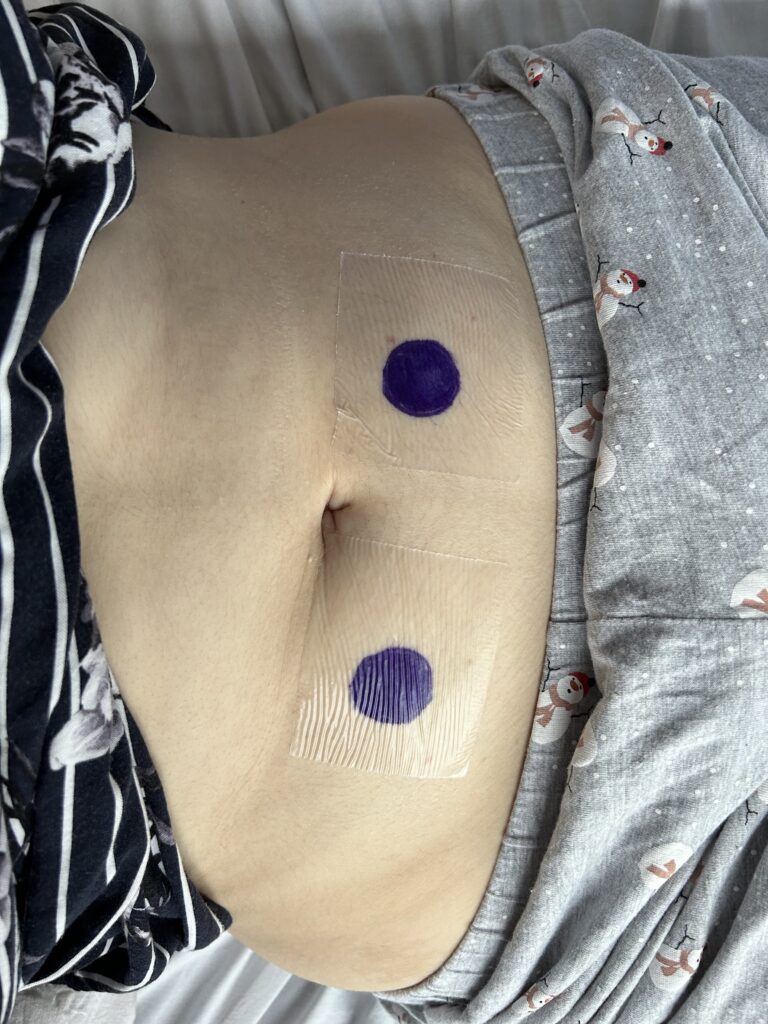
The beginning wasn’t glamorous
I don’t remember huge portions of the first few days after surgery. I was on considerable pain relief, exhausted, confused and trying to comprehend an enormous amount of change while my body was recovering from emergency surgery and severe illness. We won’t even mention some of the complications, because my body loves to throw unexpected curveballs.
Eating was difficult in the first few weeks and I needed TPN (total parental nutrition – i.e. you get fed through a PICC line into your heart/risky and can lead to infections/I was lucky) temporarily because my body was so depleted. Moving around was difficult – my Ehlers Danlos syndrome complicated getting comfortable, and emotionally I was trying to process a body that suddenly looked and functioned differently.
Within a few days, the stoma nurses started teaching me how to change my bag. At first, I won’t lie, I gagged. I didn’t particularly enjoy looking at my stoma and the sheer number of products and steps felt overwhelming. I knew there wasn’t really an alternative except learning how to do it, so gradually I did. Now I could practically change a bag with my eyes closed!
I wish people (particularly professionals) had stressed more to me early on – what feels completely overwhelming in week one may eventually become as ordinary as brushing your teeth. It really isn’t as scary as it seems in that moment, but I didn’t know that at the time.
Preparing to come home
One of my biggest regrets from that early period isn’t actually about stoma products or the stoma itself. It was the lack of professional support and input surrounding care at home as an adult needing social care.
When I first came home, my care requirements had increased enormously and so much fell onto my family simply because we didn’t know what other support might be available. Some of these care needs came from my other conditions being heightened, whilst others came from dealing with the new stomas and routine, diet and dressing that my wounds at the time required.
If you’re in England and struggling to manage everyday tasks after surgery or because of disability, you can ask your local council for an adult social care needs assessment. What you’re entitled to will depend on your individual circumstances and local assessment, but support can include practical help at home. I have subsequently gotten this, and it has changed my life. I wish I’d known about it sooner, rather than burning out those closest to me so quickly after all the stress and then the physical help I needed.
It wasn’t about not wanting to become independent again after, I did want to mroe than ever – but sometimes independence looks like having the right support that you can heal properly after so much trauma.
Finding the right stoma products changed everything
The first products I used weren’t right for me.
The bags felt big and crinkly and the products being used for my mucus fistula created their own problems, which left me increasingly frustrated when I was already trying to adjust to everything else. Not to mention, I’m autistic, which seemed to be pushed by the wayside by the professionals.
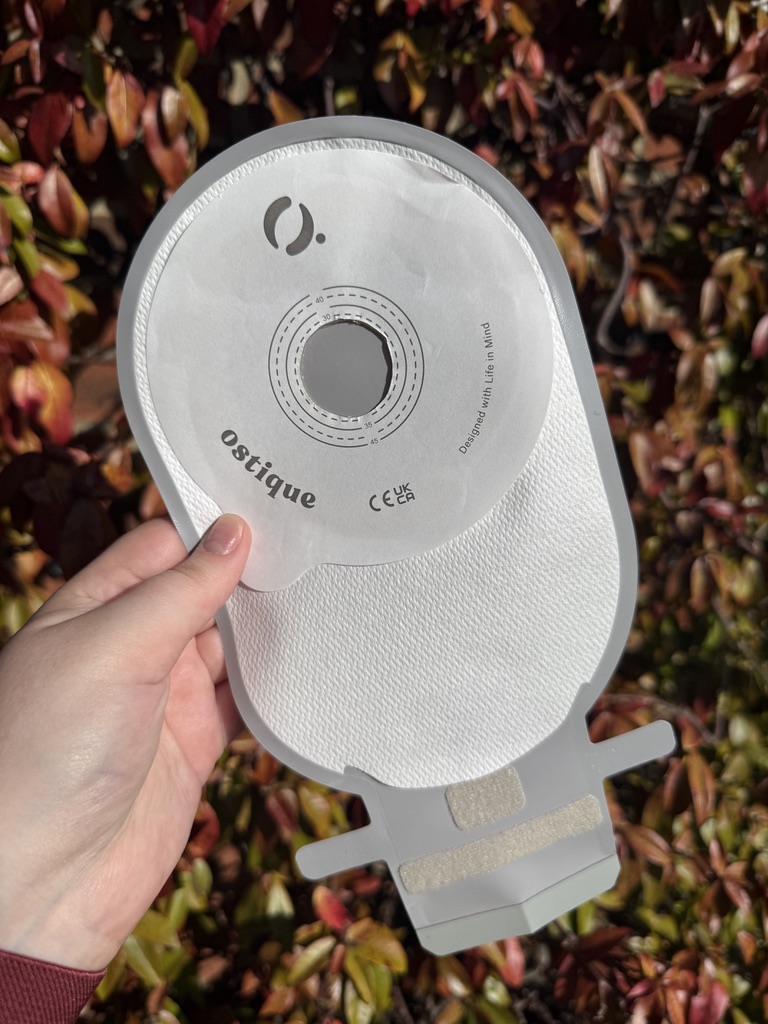
Then I met a brilliant stoma nurse who introduced me to Coloplast products. For me, this was a game changer and I still use them now. The products worked much better with my skin, my two bags visually matched which made me feel a bit more like ‘me’ and I experienced considerably fewer problems with leaks and adhesion.
I liked them so much that I eventually became a Coloplast Ambassador, although that doesn’t mean everybody reading this needs the same products I do. Different bodies, stomas and skin require different solutions.
The important thing is knowing that if the product you’re discharged with isn’t working for you, it doesn’t necessarily mean you’re stuck with it. Talk to your stoma nurse – if you don’t who that is, try calling your local hospital and asking for the stoma team, they should be able to point you in the right direction.
It honestly might be as simply as them offering you something else that suits your body better. You don’t have to put up with it if you’re having issues.
Leaks aren’t necessarily your new daily reality
I think every new stoma patient is frightened at the beginning of having leaks, but I actually haven’t experienced that many (so far!).
If I look across nearly two years with my stoma, I could probably count the significant leaks I’ve experienced on my hands. Most of my earlier problems happened because I was desperately trying to make my stoma conform to the way I wanted to dress and live rather than learning how it wanted to behave first.
As my body changed following surgery, the position of waistbands mattered. If something compressed the bag in the wrong place, it could prevent it filling properly and create problems. Once I learnt that certain clothes needed to sit over or underneath my stoma rather than directly restricting it, things became considerably easier and it was something I could work with.
Now I wear pretty much anything I want.
And despite all those terrifying stories new stoma patients read at 2am, I have never woken up to the mythical bed-destroying explosion everybody seems convinced is inevitable. Is it impossible? I’m sure it is, but I certainly have found that the adhesive is a force to be reckoned with thus far. I’ll report back if that ever changes!
Clothes will feel normal again – you will get back to being ‘you’
Initially, stretchy clothing was my friend. I was recovering from major abdominal surgery, dealing with a significant wound and trying to make my body comfortable, so leggings, hoodies and softer clothing made sense.
Eventually I started experimenting again – I’ve always been quite a dopamine dresser. I loved dresses and still do because they flow beautifully over my stoma, but I’m at a stage now where I’ll wear almost anything. If something very fitted presses too much, I’ll size up or adjust where the waistband sits.
The goal isn’t disguising the stoma at all costs and in all honesty, I’m sure if you knew where to look you might faintly see it’s outline – but I’m not fussed. It’s giving the bag enough room to function while still dressing like myself.
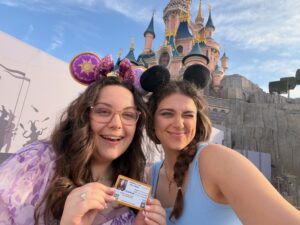
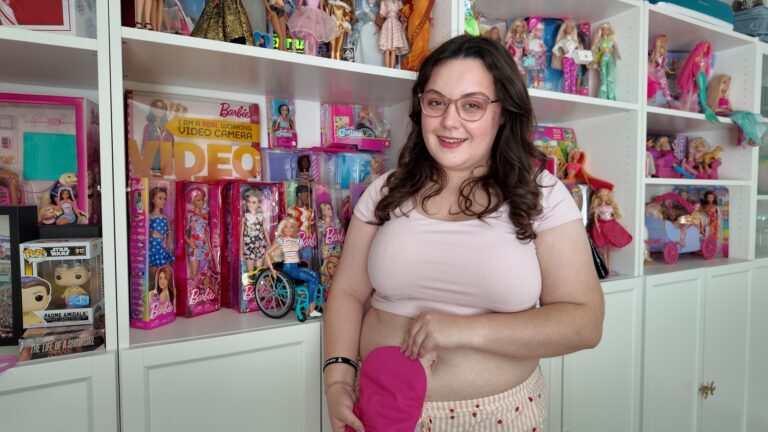
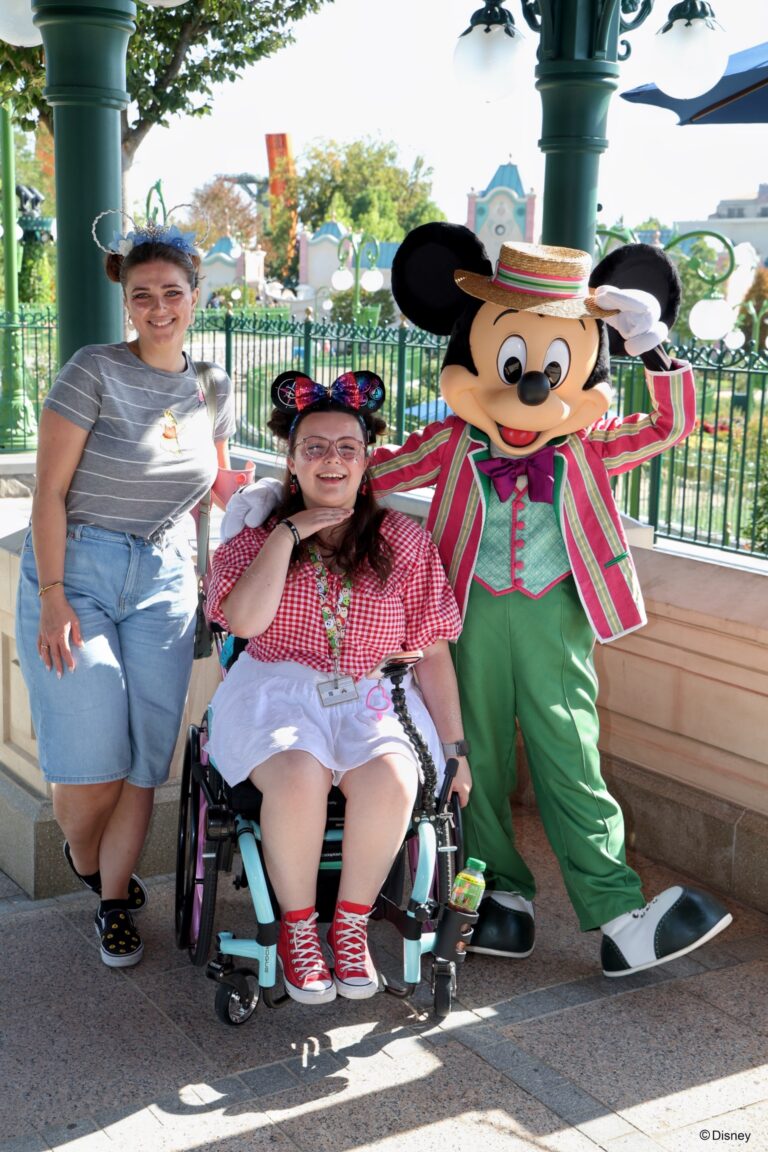
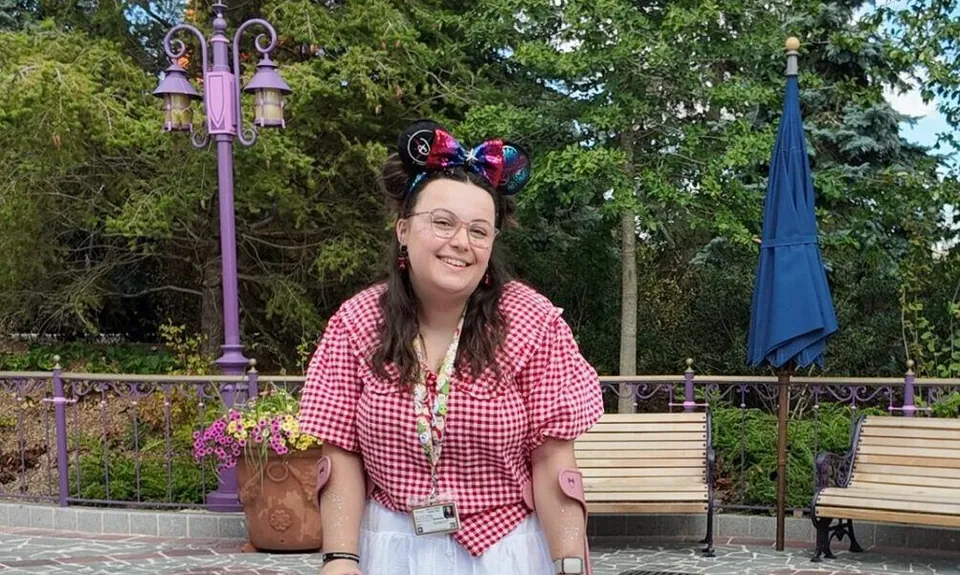
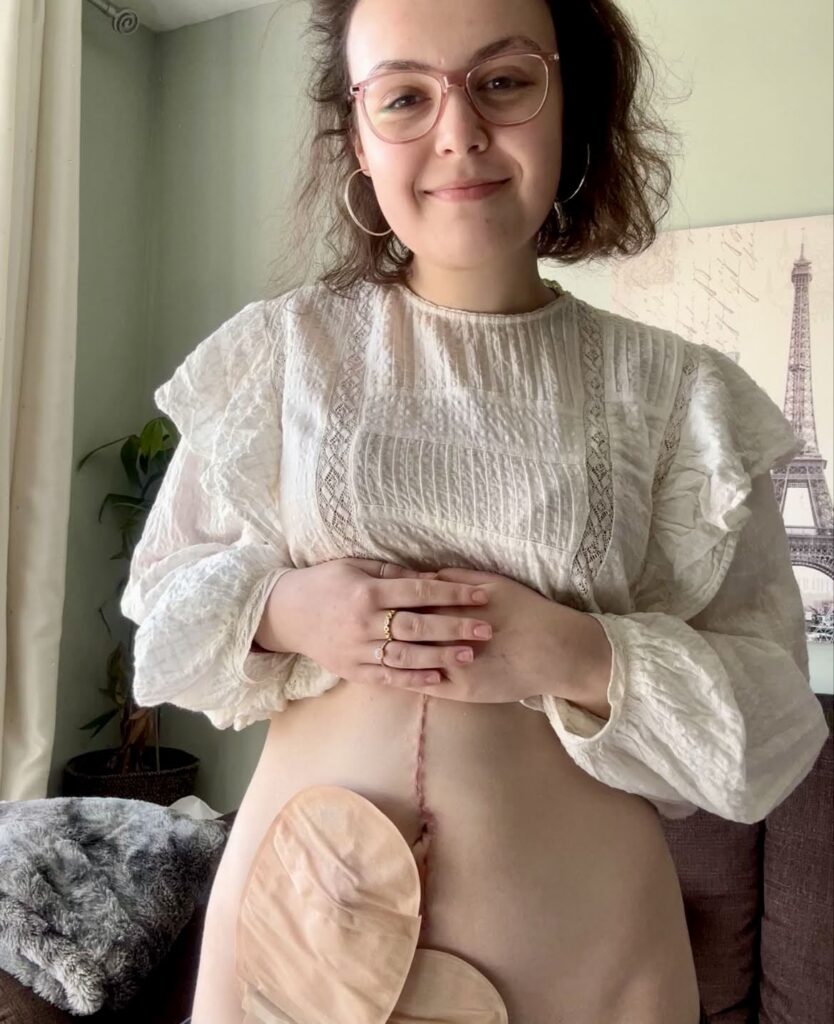
I’ve worn elaborate Disneybound outfits. I’ve made little Mickey-style ears for my stoma bag and I’ve photographed it openly. Why shouldn’t I I show off the bag that saved my life – I might as well accessorise!
Naming my stoma genuinely helped – I know that sounds crazy
When the nurses told me to name my stoma, I thought they’d lost the plot.
I was not remotely interested. Autistically, I rely a lot on logic, so the idea of naming my organ was not one I could get my head around. Eventually, though, I gave in and called mine Merlin and the mucus fistula is called Bruno (hint *we don’t talk about Bruno). Bizarrely, I hate to say it, but they were right.
Naming the stoma separated it slightly from me psychologically. When it makes a ridiculous noise in a quiet room, instead of feeling mortified that my body has done something uncontrollable, I can laugh and say, “Sorry, Merlin’s got something to say today.” It sounds silly, but when you’ve spent years losing autonomy over your body, having doctors touch it, prod it, treat it and make decisions about it, sometimes silly things help you reclaim ownership.
That is also why I decorate my bags, show them publicly and incorporate my stoma into outfits. I’m not pretending that having a stoma is always fabulous – but I’m choosing how I relate to something I have no option but to live with. I decorate all my other aids, so why not my bag!?
Food won’t always be a worry
One of the principles my stoma nurse gave me was essentially: try a little first and see how your body responds. That has worked SO well for me.
There are foods I’m more cautious with, and everybody’s stoma behaves differently, but I gradually became far more confident experimenting.
Early after surgery, dietary guidance can understandably be more restrictive while the bowel heals. Longer term, NHS guidance says many people gradually reintroduce foods and work out their own tolerance.
For me, the fear reduced as experience increased. You don’t need to sit down in week three and confidently understand how your stoma responds to every food, but you will learn one meal at a time. Just take it slow, see how you go, and don’t rush.
I also had a strange relationship with food after everything that happened to me in hospital, but that’s probably a conversation for another post…
Hydration is something I take far more seriously now
This was something I didn’t understand properly at first. With an ileostomy, hydration can behave differently because the colon is no longer doing its usual job of absorbing water and salts.
I’ve learnt to pay much closer attention to hydration, especially in hot weather or when I’m unwell, and electrolytes form part of my own routine. This is particularly important for me because dehydration can become serious quickly.
If your output changes significantly, you’re struggling to maintain hydration or you’re concerned about your kidneys, contact your stoma team or medical service rather than relying on the way your body ‘used to act’ pre-stoma – it’s very different now.
Medication can need another conversation too
My medication situation is complicated because I live with multiple health conditions. Since surgery I’ve had to work closely with my GP and specialist teams to understand which formulations work well for me and investigate nutritional deficiencies when they’ve appeared.
The important lesson I’d pass on isn’t, “people with stomas should take this particular tablet.”
It’s:
Tell your pharmacist that you have an ileostomy and raise concerns if tablets appear unchanged in your bag, your symptoms change or you’re worried a medication isn’t behaving as expected.
A stoma changes the digestive system, and there isn’t a lot of research out there to explain how tablets will digest, so you’re best to work very closely with your team on it. If you think instinctively something is wrong – do tell someone in your team!
Your stoma will probably make noise
Nobody prepared me for this – but stomas grumble.nSometimes they appear to have extremely strong opinions during otherwise quiet conversations.
At first I was hyper-aware of every movement and sound because it felt enormous to me. Eventually I realised most people either don’t notice or don’t care. It kind of sounds like a rumbly tummy to them. It’s one of those things hospital leaflets really struggle to capture because medically it’s not particularly exciting.
Socially, when your stomach suddenly sounds like an angry drain during at talk it feels considerably more noteworthy. I once gave a speech and my stoma became particularly noisy – I was reassured afterwards that nobody heard it in the microphone, but I worried the whole time!
Can we talk about Phantom poos?!
This is one of those sentences that makes perfect sense if you’ve experienced it and sounds completely unhinged if you haven’t.
Your brain has spent your entire life understanding that certain sensations mean it’s time to go to the toilet. Surgery changes the plumbing considerably and your brain doesn’t get that. I still experience strange phantom sensations and, because I have a mucus fistula and remaining bowel anatomy, there are ongoing realities around a little bit of mucus too.
It goes without saying, if you’re experiencing new pain, unexpected discharge, bleeding or anything that concerns you, speak to your stoma or colorectal team.
But the basic experience of your brain occasionally behaving as though the old system still exists isn’t something you’re uniquely imagining. It’s just hardwired into your day-to-day.
The first normal thing I did was buy milk
After months of hospitals, pain, surgery and recovery, I remember going to the shop simply to buy milk. Nothing dramatic happened. Nobody looked at me and knew what I’d been through. I was upright. I was functioning. I was in the real world doing an incredibly boring errand and it felt revolutionary. Later came much bigger things.
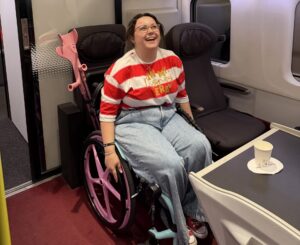
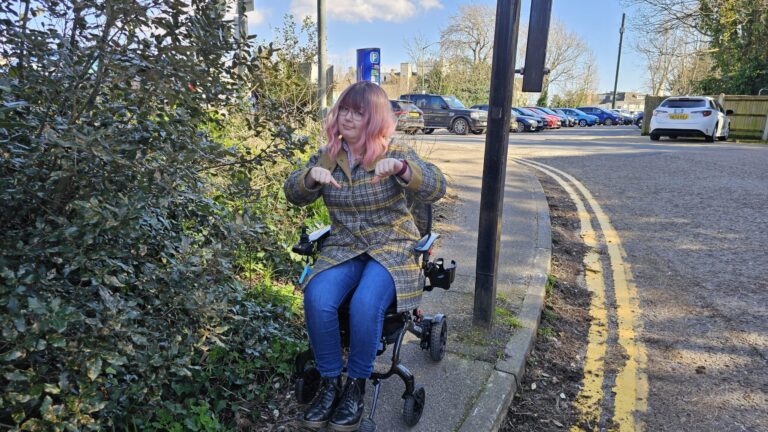
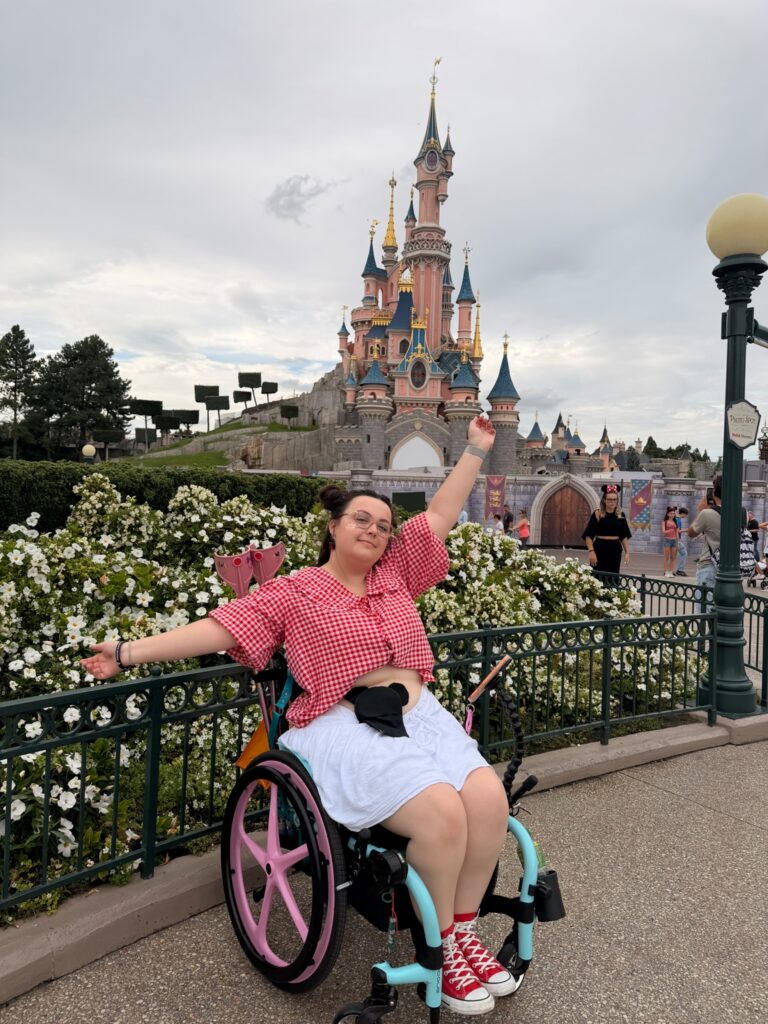
Four months after surgery, I went to the Taylor Swift Eras Tour using my powered wheelchair. I danced with my friends and had one of the best experiences of my life. The most important thing about that day?
It wasn’t about my stoma.
That’s what normal eventually started to look like. Not forgetting what had happened, but having entire experiences where it wasn’t the main character anymore and GOOD RIDDANCE I was so sick of talking about my bowels.
What does my normal look like now?
These days I wake up, shower, change my bags most days and get on with my life.
I might work from home, film content, meet a friend for coffee, bake, go shopping, attend an event or travel somewhere.
I eat normally for me. I check my bag when I need to. I empty it. Most of the time, Merlin behaves.
I still carry an emergency makeup bag with spare stoma and mucus-fistula bags, barrier rings, remover, wipes and disposal bags, although ironically I probably carry less emergency equipment now than I did when I still had my colon because the accidents before surgery could be far more spectacular.
A stoma remains part of my routine – it simply isn’t the centre of my world anymore. In fact, I often forget that it’s there!
Life after stoma surgery can be good and difficult simultaneously
I don’t love every change to my body. My relationship with my body remains complicated by surgery, illness, Cushing’s and everything that happened in an incredibly short period of my twenties.
I am also profoundly grateful to the stoma that helped keep me alive. We need more room for those two things to coexist.
You don’t have to call your stoma your best friend and you certainly don’t have to celebrate every bag change.
You also don’t need to believe that life is over because you’ve had surgery.
Honestly, life after stoma surgery at the beginning isn’t particularly glamorous, but it gets better.
You get quicker at changes, your emergency kit gets smaller, and your confident grows.
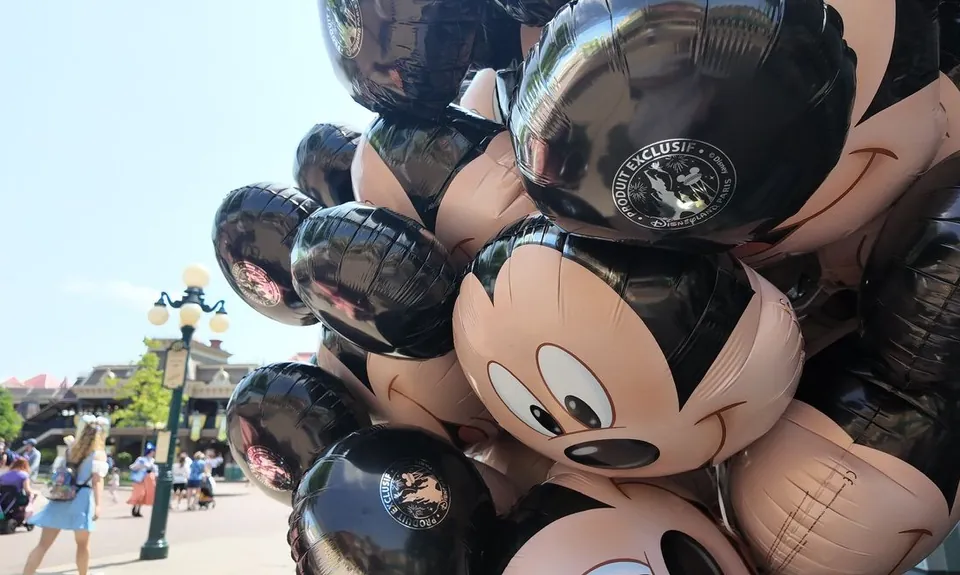
Then one summers day, you’re standing in Disneyland Paris wearing Mickey ears you made for your stoma and slowly you realise that this isn’t the end of your life. It’s another version of it – to quote Taylor Swift, you’re entering a new era.
If you’ve recently had stoma surgery, how you feel today won’t be how you feel forever.
Give yourself time, learn your ‘new’ body, ask for help (and make yourself heard) and try the things you want to try when you’re ready.
Embrace whatever little pieces of normal begin finding their way back to you. Start small, a cup of tea, being at home in your PJs, enjoying time with friends or family. Build up from there, the good times are coming.